| Most viewed |
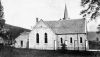
Tarbet Church958 viewsThe former Ballyhennan Church near Tarbet is now the Ben Lomond cafe and craft shop. In the parish of Arrochar after the Disruption there was soon practical evidence of the spirit of evangelical fervour, and money poured in for a building fund. After an open-air Communion Service on the first Sunday of August, 1843, it was decided to petition the Free Church Presbytery for sanction to build a church and call a minister. A contract for building was entered with Dunoon builder Alexander Stewart for a church to seat 250 at £240 sterling. Work began on January 10 1844, and finished on April 11 1844. The Rev Colin Mackenzie was inducted to the Parish at Balhennan (now Ballyhennan) a week later. It ceased to be a church in 1966. Image date unknown.
|
|

Burnfoot958 viewsThe Burnfoot farmhouse at Arden on Loch Lomondside, looking north towards Ben Lomond. Also known as Burnfoot of Ross Farm. Nearby the ferry to Inchmurrin leaves. Image circa 1920.
|
|

Loch Sloy Dam958 viewsThe Loch Sloy Dam, near Tarbet. The UK's largest conventional hydroelectric power station, Sloy Power Station, takes water from Loch Sloy through four large pipes down the hillside giving a working height of 277 metres. Loch Sloy is fed by tunnels and aqueducts from a much larger area. The power station was opened in 1950 by the Queen Mother and was designed to provide power to Central Scotland at Scotland at times of peak demand. The station was refurbished in the late 1990s. Image date unknown.
|
|
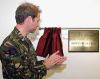
Prince William-1957 viewsHRH Prince William of Wales visited HM Naval Base Clyde at Faslane on October 19 2007 in his honorary Royal Navy capacity as Commodore-in-Chief Scotland and Submarines. He is pictured unveiling the plaque for the newly refurbished 'Dungeon' at the comprehensively upgraded Drumfork Club in Churchill, Helensburgh, a room used by a variety of community groups. Prince William is currently a serving Second Lieutenant in the Household Cavalry, also known as the Blues and Royals.
|
|

Andy and Jean Clyde957 viewsFilm star Andy Clyde and his sister, stage star Jean Clyde, who both spent much of their childhood in Helensburgh, pictured together outside the Mac Sennett Studios in August 1931 when Jean had a holiday with Andy in Hollywood.
|
|
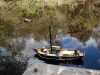
Comet replica956 viewsThis working model of Henry Bell's Comet steamship was built and sailed by members of Helensburgh and District Modellers Club, who in August 2012, after the bicentenary celebrations, donated it to Helensburgh Heritage Trust for display in the Heritage Centre in Helensburgh Library in West King Street.
|
|
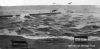
Pier awash956 viewsHelensburgh pier is almost submerged in a gale. Image circa 1928.
|
|

Arrochar Pier954 viewsCarriages arrive with passengers for a steamer — possibly the Marmion — berthed at Arrochar Pier, which was built in 1850 and used to service several steamers daily with visitors from Glasgow, circa 1913. Image supplied by Jim Chestnut.
|
|
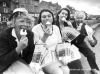
953 viewsLocal councillor Billy Petrie and three ladies enjoy their ice creams as they launch a new tourist leaflet 'In and around Helensburgh and Rosneath District'. Image daye unknown.
|
|

Rhu Village Green952 viewsChildren enjoy playing on the village green in front of Rhu Church, circa 1905.
|
|

Baird's electric light plant952 viewsAs a schoolboy John Logie Baird installed an electric light plant in the family home, the Manse, in West Argyle Street, Helensburgh. He is seen here with part of the plant. A home-made dynamo was driven by a water-wheel connected to the water main, and with a collection of jam jars and sheet lead successfully generated current.
|
|

St Modan's, Rosneath952 viewsSt Modan founded a church at Rosneath in the 6th century, and died there. In 1880, a finely carved stone was dug up from the grounds of the present church. It has been dated to circa 800 A.D. and is thought to represent the tombstone of St Modan. It is preserved inside the church. The present building celebrated its centenary in 1953. In the grounds are the ruins of the previous church (1780), and the only known grave in Scotland of an African slave, Robert Story, who came to Scotland as a freed slave.
|
|
| 2190 files on 183 page(s) |
 |
|
|
|
|
138 | |
|
|
|
|