| Most viewed - Welcome to the Helensburgh Heritage Trust Gallery |
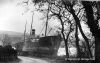
Ship aground988 viewsThe SS Siberian after being blown ashore in the Gareloch in a storm in 1911. Image supplied by Malcolm LeMay.
|
|

Loch and Ben Lomond987 viewsA steamer on Loch Lomond, with Ben Lomond in the distance, circa 1912.
|
|
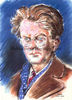
Baird by Coia987 viewsThis portrait of John Logie Baird by eminent Glasgow artist Emilio Coia was commissioned for Lomond School but was lost in the St Bride’s building fire in 1997, but both Lomond and Professor Malcolm Baird have colour laser copies. The idea was to provide a visible tribute to the school’s greatest former pupil in the absence of any commemoration in the school, and it was unveiled in September 1990 by the inventor’s widow, Mrs Margaret Baird.
|
|
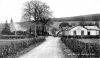
The Clachan987 viewsThe Clachan area of Rosneath, with the school on the right and St Modan's Church on the left. Image date not known.
|
|
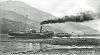
S.S. Marmion987 viewsAn early image of the Clyde paddle steamer Marmion leaving Arrochar. The 403 ton vessel was launched on May 5 1906 by A and J Inglis at Pointhouse, Glasgow, and placed on the Loch Goil and Arrochar service for the North British SP. She was requisitioned for mineweeping duty at Dover from 1915 as HMS Marmion II, and returned to the Clyde for the 1920 season, then was laid up for a redesign. She returned to service in 1926 as an all-year-round vessel, was reboilered in 1932, then again was requisitioned for war service. She was stationed at Harwich and survived the Dunkirk evacuations, but was sunk by enemy bombers at Harwich on the night of April 8 1941. Later she was raised and scrapped.
|
|
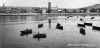
Seafront987 viewsAn early image of Helensburgh seafront, looking from the pier to the east side of the town. As there is no bandstand, it must have been taken before 1906. Image kindly supplied by Robert Ryan.
|
|
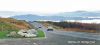
Over the hill987 viewsHeading towards Loch Lomond from Coulport. image, date unknown, supplied by Gordon Fraser.
|
|
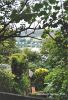
Garelochead from station986 viewsA 1907 image looking down the hill at Garelochhead from the station on the West Highland Line.
|
|
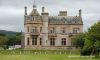
Cairndhu986 viewsThe magnificent William Leiper-designed Helensburgh seafront mansion Cairndhu, which is now boarded up, pictured in its heyday by Gordon Fraser. It was built for Glasgow businessman John Ure, who later became Lord Provost of Glasgow, in the style of a miniature French chateau, with stained glass windows by Daniel Cottier. The mansion remained a private home until the Second World War. In September 1940 it was requisitioned by the Royal Navy and became home to part of HMS Vernon, along with neighbouring Ardencaple Castle. for degaussing operations. In 1947 Cairndhu was returned to private ownership and became a hotel and then a nursing home.
|
|

John Logie Baird at Hastings985 viewsHelensburgh-born inventor John Logie Baird is pictured at the unveiling of a plaque by the Mayor of Hastings, where Baird first demonstrated television in 1924.
|
|
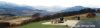
Glen Fruin985 viewsA view of Glen Fruin from a layby on the Haul Road across to Coulport. Image, dates unknown, supplied by Gordon Fraser.
|
|
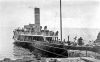
Steamer then minesweeper985 viewsThe Clyde steel paddle steamer Redgauntlet, built in 1895 for the North British Steam Packet Co. at Craigendoran and launched on April 4, is pictured at the Isle of May. She was built by Barclay, Curle & Co. Ltd., Glasgow, at their Clydeholm Yard, and in May 1909 passed to the Galloway Saloon Steam Packet Co. for its Firth of Forth service. On May 4 1916 she was requisitioned by the Admiralty for use as a minesweeper and was based in Grimsby and commissioned as HMS Redgauntlet II. The following year she was bought by the Royal Navy, and two years later sold to French owners and registered in Algeria. It is believed that she was scrapped in 1934.
|
|
| 2190 files on 183 page(s) |
 |
|
|
|
|
148 | |
|
|
|
|