| Most viewed - Heritage |
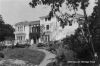
Woodstone Hotel1104 viewsWoodstone Private Hotel at Rhu. Its proprietor for many years was Miss E.M.Lyle. Image c.1906.
|
|

General Booth in Burgh1103 viewsGeneral William Booth, founder of the Salvation Army, visited Helensburgh on October 26 1910 to give a lecture in the Victoria Hall, staying overnight with the Kidston family at Ferniegair. He is pictured at Helensburgh pier the next day before leaving for Port Glasgow, with Provost David S.Maclachlan saying farewell. The gentleman in the bowler hat is the Lord Lieutenant of Dunbartonshire, Lord Inverclyde. Image supplied by Provost Billy Petrie.
|
|
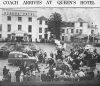
1962 celebrations1103 viewsA coach carrying local dignitaries in costume, including Provost J.McLeod Williamson, arrives at the Queen's Hotel, which as the Baths Hotel had been opened and operated by Henry Bell and his wife. They had just made the trip across the Firth to Helensburgh pier on board the Comet replica. This cutting from the Helensburgh and Gareloch Times was supplied by Bruce Benson.
|
|
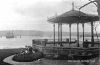
Kidston Band Stand1103 viewsA family relax outside the now demolished band stand at Kidston Park, with the Training Ship Empress in the distance. The bandstand was used by the boys bands from the Empress and its predecessor Cumberland. Image, date unknown, supplied by Jim Chestnut.
|
|
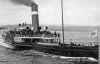
Redgauntlet1103 viewsThe Clyde paddle steamer Redgauntlet saw service as a World War One minesweeper. Built by Barclay Curle in 1895 for the North British Railway, she served on the Craigendoran to Rothesay route. In August 1899 she ran on to rocks off Arran in a gale and was badly holed, but the captain ran her up the beach so that crew and passengers could be rescued. After repairs, she was moved to the Forth in 1909 and then sold to the Galloway Steam Packet Company. Later she went to Algeria and was broken up about 1934. Image circa 1925.
|
|
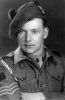
Ivor McIvor1103 viewsSergeant Ivor McIvor of 162 Battery (Helensburgh), 54 Regiment Light Anti-aircraft, Royal Artillery, Territorial Army. He joined up in the late 1930s, as did many of his friends, not long after leaving school. Image, date unknown, supplied by Ivor's son, Colin McIvor of Largs.
|
|
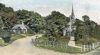
Kilcreggan Church1102 viewsThis small corrugated iron church at Kilcreggan was opened for public worship on May 30 1869, and later became a garage. It stood at the junction of the old Fort Road and the main road called the Ferry Brae, with the Ferry Cottage shown on the left part way up the hill. It was Free Church of Scotland and had no organ to sing to. Instead the Precentor struck a tuning fork to give the congregration the right key to start the hymn singing. Before the Reformation another church existed almost on the same site.
|
|
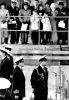
Prince Andrew1102 viewsHRH Prince Andrew, at the time a serving naval officer, on a visit to the Clyde Submarine Base at Faslane on October 22 1994 to mark the decommissioning of the Polaris submarine HMS Resolution which had been in service for 27 years.
|
|

Methodist holiday1102 viewsA group of Methodists of all ages on holiday at Ardenconnel House in Rhu in the mid-1930s. The B-listed mansion was built by the Buchanan family in the late 18th century, and Ardenconnel was one of the principal estates of the old parish of Row. It was bought in 1899 by the Countrywide Holidays Association, and by 1908 could accommodate 120 guests. The CHA is the oldest walking holiday company in the country, set up in 1893 to encourage participation in, and enjoyment of, the countryside, and to this day, while no longer operating walking holidays, is still working hard to fulfil the vision of founder the Rev T.A.Leonard. The mansion was later converted into modern flats. Image by Jean M.Watson.
|
|
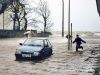
Street flooded1102 viewsA car is marooned by flooding in Helensburgh's Glenfinlas Street just above the East Clyde Street junction. 1990s photo kindly supplied by Iain Duncan.
|
|

The Cobbler1101 viewsThe Cobbler mountain near the head of Loch Long at Arrochar, also known as Ben Arthur. It is called the Cobbler because of its resemblance, from a distance, to a cobbler at work. Image circa 1900.
|
|
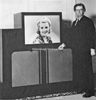
Baird colour TV1101 viewsThe first public demonstration of John Logie Baird's 120-line system to transmit colour films on to a large screen took place at the Dominion Theatre in London on February 4 1938, with a second demonstration from Crystal Palace on February 17. He used the electronic system to produce a 600-line two by two and a half feet screen image on a colour Tele-Radiogram.
|
|
| 2190 files on 183 page(s) |
 |
|
|
|
|
130 | |
|
|
|
|