| Most viewed |
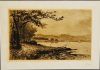
Rosneath shore914 viewsAn etching of Rosneath shore and the Gareloch by Greenock-based artist Peter Kerr. The McLean Museum in Greenock has many of his paintings. Most of his landscapes were of the Clyde shores, and Cove and Kilcreggan. He was married to Catherine McMillan, born in Helensburgh in 1863, whose family owned the Teak and Ash. Image supplied by Malcolm LeMay, whose wife is a distant relative of the artist.
|
|
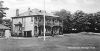
Original clubhouse913 viewsThe original Cardross Golf Club clubhouse, which was destroyed in a World War Two bombing raid by the Luftwaffe over the night of May 5 1941. Photo by courtesy of Helensburgh Memories on Facebook.
|
|
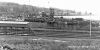
Faslane shipbreaking912 viewsThe Shipbreaking Industries yard at Faslane, clearly illustrating that they broke up old railway locomotives as well as ships. After Faslane had been a military port in World War Two, at the end of 1945 the southern section was handed over to the Royal Navy who used it as a base for the Reserve Fleet. In August 1946 the rest was handed over to Metal Industries (later Shipbreaking Industries) for shipbreaking. Many famous vessels ended their days there, including the last four-funnelled liner, the Aquitania, the German battleship Derflinger which had been scuttled at Scapa Flow, and the last battleship built for the Royal Navy, HMS Vanguard. Image, date unknown, by courtesy of Stewart Noble.
|
|
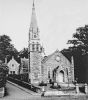
Shandon Church910 viewsBuilt in 1844 as Shandon Free Church, it became linked with Rhu Church in 1954. It continued in use until 1981 and was then converted into housing, with the height of the steeple being substantially reduced. Shandon Pier used to stand straight across the road from the church. Photo by Professor John Hume.
|
|
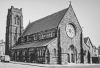
St Michael's Church909 viewsHelensburgh's St Michael and All Angels Scottish Episcopal Church stands at the corner of William Street and West Princes Street. On Sunday August 22 1841 a congregation of Scottish Episcopalians met in the room of a house in William Street, where Divine Service was solemnised by the Very Rev William Routledge. Their first church, dedicated to the Holy Trinity, opened on the site of the present St Michael's Church in 1843. Sir Robert Rowand Anderson, a prolific architect and pupil of George Gilbert Scott, chose the style of the Gothic Revival for the current church which was consecrated on May 7 1868. it is Helensburgh's only grade A listed church. Photo by Professor John Hume.
|
|
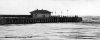
908 viewsA 1925 image showing Helensburgh pier and the pierhouse.
|
|

PS Kenilworth907 viewsA 390-ton paddle steamer built in 1898 by A. & J.Inglis at Pointhouse for the North British Steam Packet Company, she operated on the Clyde until 1937, serving initially on the Craigendoran to Rothesay route. She was refurbished and reboilered in 1915 and saw limited World War One service from 1917-19 as a minesweeper on the South Coast. Upon her return in 1936 she was the first of the Craigendoran fleet to acquire the grey hull and reopened the Arrochar excursion service. Retired in 1937, she was broken up the following year at the yard where she had been constructed. Image circa 1936.
|
|
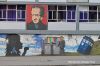
Whole Wonder Wall905 viewsA tribute to John Logie Baird on the wall of the University of Strathclyde Graham Hills Building in George Street, Glasgow — one of a number of massive official murals. Appropriately, on the right is Dr Who's Tardis. Image supplied by Des Gorra.
|
|
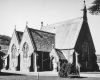
St Modan's Rosneath905 viewsSt Modan came to Rosneath around the year 600 and founded probably one of the oldest churches in Scotland. He died around the year 700 and a gravestone preserved in the present church is probably his. Today's church, an A listed building, is the fifth, and it was opened for worship in 1853 and subsequently extended twice. Two items in the building, a Bible and the reredos, are linked to Princess Louise, daughter of Queen Victoria and wife of the 9th Duke of Argyll, who lived in Rosneath Castle.Photo by Professor John Hume.
|
|
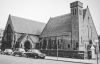
United Reformed Church902 viewsThis building occupies the site of Helensburgh's very first church, The Tabernacle, which was built in 1802 at the corner of James Street and West Princes Street. Almost immediately after the building was opened the congregation voted to become part of the Congregational Church. The original building had to be demolished in 1851 and a new church was built on the site which now serves as the church hall, and which can be seen on the right side of the photo. Today's church (on the left of the photo) was built in 1884. In 2000 the Congregational Church joined the United Reformed Church. Photo by Professor John Hume.
|
|
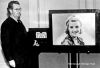
Telechrome demo900 viewsJohn Logie Baird's August 1944 demonstration of the Telechrome, the world’s first cathode ray tube for colour television, was an historic event. The picture was large and bright, a great improvement over the small flickery images of the old mechanical system.
|
|
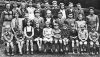
Shandon School c.1944892 viewsElinor Grummitt, who still lives in Shandon, supplied this image from around 1944. She is second left, back row. Her sister is middle of the middle row and her brother second left, front row. Far left is teacher Miss Buchanan, who came after Miss Willan retired, and the lady on the right is Mrs Hutchison, who helped out her janitor husband. The boy, second right bottom row, was Polish. His father was an officer in the Polish army, billeted at Shandon Hydro. His name was Richard Stetner.
|
|
| 2190 files on 183 page(s) |
 |
|
|
|
|
165 | |
|
|
|
|