| Most viewed |
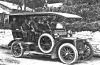
First service1240 viewsDavid Wilson at the wheel of his own bus. He was the first to run a bus service between Helensburgh and Rhu. Image, circa 1915, supplied by his grand-daughter, Marlyn Ritchie.
|
|
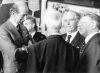
The Duke of Kent at Rhu1239 viewsHRH The Duke of Kent visits the Rhu RNLI Station on July 27 1994. He is talking to Ferdie Thurgood (back to camera) and Dr Peter Campbell.
|
|
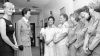
HRH The Princess Royal1239 viewsPrincess Anne talks to staff at the Jeanie Deans Unit in the grounds of the Victoria Infirmary in Helensburgh on a visit on August 19 1998. She previously visited the unit, which closed in 2007, on February 5 1990.
|
|

Buchanan and Astaire1239 viewsIn 1953, the top UK and US song-and-dance men met in The Band Wagon. Helensburgh man Jack Buchanan and Fred Astaire's duet, "I Guess I'll Have To Change My Plan", and their clever version, with Nanette Fabray, of "Triplets" fame, made this one of MGM's most acclaimed musical films, and the pinnacle of Buchanan's career.
|
|
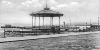
Bandstand and pier1239 viewsLooking across from the Sinclair Street junction towards the bandstand, with the pier and a steamer beyond. Image circa 1910.
|
|
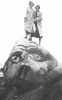
King Tut 19511238 viewsTwo ladies stand on top of the famous painted rock 'King Tut' at Kilcreggan in 1951.
|
|

Deborah Kerr and daughters1238 viewsNoses pressed against the train window pane, Melanie Jane, aged ten, and Francesca Anne, six, are joined by their mother, Helensburgh film star Deborah Kerr, taking a last look at London before leaving Waterloo Station on the Queen Elizabeth boat train to Southampton on October 19 1957 on their way to the United States, where Deborah was about to start filming 'Separate Tables' with David Niven.
|
|
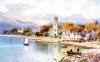
Rhu by Wimbush1237 viewsA painting of Rhu Bay in the 1890s by prolific artist Henry M.Wimbush.
|
|

Helensburgh Seafront1237 viewsA view of Helensburgh from the east seafront, circa 1920.
|
|

Arrochar Hotel1237 viewsArrochar Hotel, circa 1955, after the building of a large extension. Originally a coaching inn and called The Arrochar Inn, it was also the Torrance Hotel for a time.
|
|
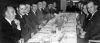
1237 viewsA late 1940s reunion of 162 Battery (Helensburgh), 54 Regiment Light Anti-Aircraft, Royal Artillery, Territorial Army, possibly at the Queen's Hotel. First left is Billy Gilmour, third left Jonny Tait, fourth left Ivor McIvor. Image supplied by Ivor's son, Colin McIvor of Largs.
|
|
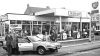
Appleyards Garage1237 viewsThe Appleyard Garage on East Clyde Street, on the site now occupied by Tesco Express in the 1970s. Petrol cost 79p for a gallon of four star. The staff in the pic with a Rover 2600 are (from left) to right, Bill Smith, Davie Nicholson, manager Donald Stewart, Iain Cowe, Agnes Wilson and Archie Pollock. Image by courtesy of the photographer, Brian Averell.
|
|
| 2190 files on 183 page(s) |
 |
|
|
|
|
105 | |
|
|
|
|