| Most viewed - Transport Steamers |
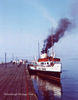
Waverley at Craigendoran1375 viewsBuilt by A. & J.Inglis at Pointhouse, Glasgow in 1946, the 693-ton Waverley entered service in 1947 and is the world's last sea-going paddler. She replaced the previous Waverley, built in 1899 and sunk at Dunkirk in 1940, andcruised to all parts of the Clyde Estuary until withdrawn after the 1973 season by Caledonian-MacBrayne. Next year she was sold to the Paddle Steamer Preservation Society and re-entered service in 1975 with support from local authorities. She is pictured at Craigendoran pier in 1972.
|
|

Waverley and Balmoral1361 viewsThe Paddle Steamer Waverley, built in 1947 on the Clyde, and Classic Cruise Ship Balmoral, built in 1949 in Southampton, were together in dry dock for the first time ever on April 18 2012. The Garvel Clyde Dry Dock in Greenock was playing host to these ships, which this year are celebrating 200 years of commercial steam navigation, with the anniversary of Henry Bell’s Comet which was built in Port Glasgow.
|
|

Jeanie Deans at Arrochar1354 viewsThe popular paddle steamer Jeanie Deans leaves Arrochar, circa 1931. She was built by Fairfield at Govan and launched in 1931, then extensively refitted after war service. She remained a passenger favourite on cruises from Craigendoran until the end of the 1964 season. The next year she went to the Thames and was renamed 'Queen of the South'. She was broken up in Antwerp, Belgium, in 1967.
|
|
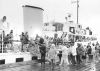
All Aboard1339 viewsPassengers prepare to board the steamer Balmoral at Helensburgh Pier in 1987.
|
|
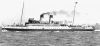
TSS Duchess of Montrose1339 viewsThe 806-ton turbine steamer was launched on May 10 1930 at the yard of William Denny & Bros Ltd., Dumbarton. The first 'one-class' vessel on the Clyde, she cruised in the lower Firth to Arran, Ayr and as far as Stranraer, Campbeltown and Inveraray, and she remained on the Clyde during World War II serving Wemyss Bay and Rothesay. Converted to oil in 1956 she undertook the long cruises, especially to Inveraray, in the post-war period. She was withdrawn in 1964, and scrapped in Ghent, Belgium, in 1965.
|
|

PS Chancellor1335 viewsThe 272-ton paddle steamer Chancellor, built by R.Chambers, Dumbarton, for the Loch Goil and Loch Long Steamboat Company for the Arrochar service. Sold in 1901 to interests at Ferrol, Spain, and renamed Commercio.
|
|

Maid of the Loch1332 viewsA Hector Cameron photo of the Maid of the Loch at Balloch Pier in August 1970. The 555 ton vessel was the last paddle steamer built in Britain, and the last of a long line of Loch Lomond steamers beginning about 1816. Built by A. & J.Inglis of Glasgow, she was dismantled, shipped by rail to Balloch where the sections were reassembled, and launched on March 5 1953. Her last commercial sailing was in August 1981, and now she is looked after at Balloch Pier by the Maid of the Loch Preservation Society.
|
|
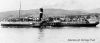
The first PS Waverley1326 viewsThe first paddle steamer Waverley, built by A. & J.Inglis at Pointhouse, Glasgow, in 1899, was bombed and sunk at Dunkirk on May 30 1940 — the 41st anniversary of her launch date — as HMS Waverley, and 350 officers men lost their lives. The 537 ton North British Steam Packet Company vessel was purchased in 1902 by the North British Railway and in 1923 by the London and North Eastern Railway. This image, date unknown, shows her off Helensburgh.
|
|
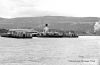
Craigendoran Pier1323 viewsA view from the sea of a steamer berthed at Craigendoran Pier, with the station in the background. Image date unknown.
|
|

Steamer at Luss1321 viewsA Loch Lomond steamer boards passengers at Luss Pier, circa 1938.
|
|

Redgauntlet and Kenilworth1318 viewsThe North British Railway steamers Redgauntlet and Kenilworth are pictured at Craigendoran Pier in this excellent 1905 picture. A cart loaded with coal is waiting on the left to refuel the Redgauntlet after the passengers have alighted.
|
|
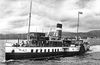
DEPV Talisman1313 viewsBuilt in 1935 by A. & J.Inglis, Pointhouse, Glasgow, for the London & North Eastern Railway, the 544-ton diesel-electric direct drive paddle steamer was used on year-round runs from Craigendoran to Rothesay and the Kyles of Bute. She saw World War Two service as HMS Aristocrat, including being an HQ ship at the Normandy landings. After 1953 she was allocated to the Wemyss Bay - Largs - Millport ferry route. She was withdrawn after the 1966 season and broken up for scrap at Dalmuir in 1967. Image taken 1946.
|
|
|
|