| Most viewed - Heritage |
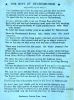
The Boys of Helensburgh1091 viewsAn old Victorian song sheet for 'The Boys of Helensburgh', printed in Larne. It refers to a parade of Orangemen in the town sometime in the 19th century.
|
|
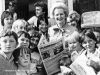
PM in Churchill1091 viewsPrime Minister Margaret Thatcher is seen visiting and meeting children at the naval married quarters estate at Churchill, Helensburgh, in 1976. Photo by Brian Averell for the Helensburgh Advertiser.
|
|
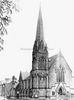
St Bride's Church1090 viewsOriginally known as the West Parish Church, St Bride's Church at the corner of John Street and West King Street was opened on March 10 1878. Its first minister was the Rev John Baird, father of TV inventor John Logie Baird. In 1981 it was united with the then Old and St Andrew's Church in Colquhoun Square to become the West Kirk, and a few years later it was demolished and replaced by a new burgh library and flats.
|
|

Annie Baird1090 viewsMiss Annie Baird, then 83, sister of John Logie Baird and daughter of the Rev John Baird, is greeted by the Rev Robert S.Cairns who invited her to cut the cake at the St Bride's Church Centenary Supper in the Victoria Hall in 1967. In the background is Mrs Arthur Wylie, one of the organisers of the event.
|
|
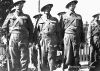
On parade1090 viewsArgyll and Sutherlands Highlanders Territorials on parade outside the Lomond Street Drill Hall in September 1939. From left: Lachie McDonald, Jimmy Handyside, Jock McDonald. Image supplied by Mrs Betty Stewart, Lachie's daughter/
|
|
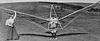
Percy Pilcher with the Bat1089 viewsPercy Pilcher with his sister Ella and the Bat glider at Cardross in 1895.
|
|

Early Helensburgh1089 viewsThis picture of Helensburgh seafront, circa 1848, looking east towards the pier was the property of the late Nance Anderson, and is now part of the Anderson Trust Collection. It is a tinted lithograph by William (known as "Crimea") Simpson, who was a professional war artist and later specialised in watercolour views of "Glasgow in the Forties".
|
|

Hermitage Park War Memorial1089 viewsThe Cenotaph in the Garden of Remembrance in Hermitage Park, Helensburgh, designed and built in 1923 by noted architect Alexander Nisbet Paterson and inspired by 'Glasgow Boy' artist James Whitelaw Hamilton, who encouraged Paterson to enter the design competition and suggested that the old walled garden of the original Hermitage House be used.
|
|
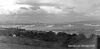
WW2 shipping1089 viewsA rare World War Two photograph taken from Portkil, Kilcreggan, looking at naval and other shipping in the Clyde between Helensburgh and Greenock. Donated to the Heritage Trust by Michael Wilson, the image is possibly of vessels assembling for the North Africa landings in 1943.
|
|
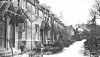
Cumberland Terrace1088 viewsCumberland Terrace in Rhu, circa 1917. It was named after the Sail Training Ship Cumberland, which was anchored off Kidston Park from 1886, when she was endowed by 12 prosperous Glasgow merchants to be a home for boys aged 12-14 at risk of being drawn into crime, until she burnt to the waterline in 1889. No lives were lost, but four boys were charged with 'incendiarism'. She was replaced by the Empress. Cumberland Terrace was built to house the ship's officers and a hospital.
|
|
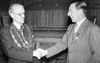
Painters president1088 viewsHelensburgh man Gregory Alexander Burgess (left) is congratulated on his election as president of the Federation of Master Painters and Decorators in Scotland at the 1952 annual conference held at Shandon Hydro Hotel by his predecessor, Robert Carfrae. Four years later Mr Burgess was elected president of the Incorporated Institute of British Decorators. Image supplied by Jenny Sanders.
|
|

P.S. Marmion1088 viewsLaunched on May 5 1906 at A. & J.Inglis at Pointhouse, Glasgow, the 403 ton Marmion was used on the Craigendoran to Arrochar and Loch Goil service for the North British Steam Packet Company. She was requisitioned for mineweeping at Dover from 1915 as HMS Marmion II, and returned to regular Clyde service in 1926. Again she was requisitioned for war service, stationed at Harwich. After surviving the Dunkirk evacuation, she was sunk by enemy bombers at Harwich on April 8 1941 and was later raised and scrapped.
|
|
| 2190 files on 183 page(s) |
 |
|
|
|
|
106 | |
|
|
|
|